DIFC Passes 10,000 Registered Companies for the First Time
July 28, 2026
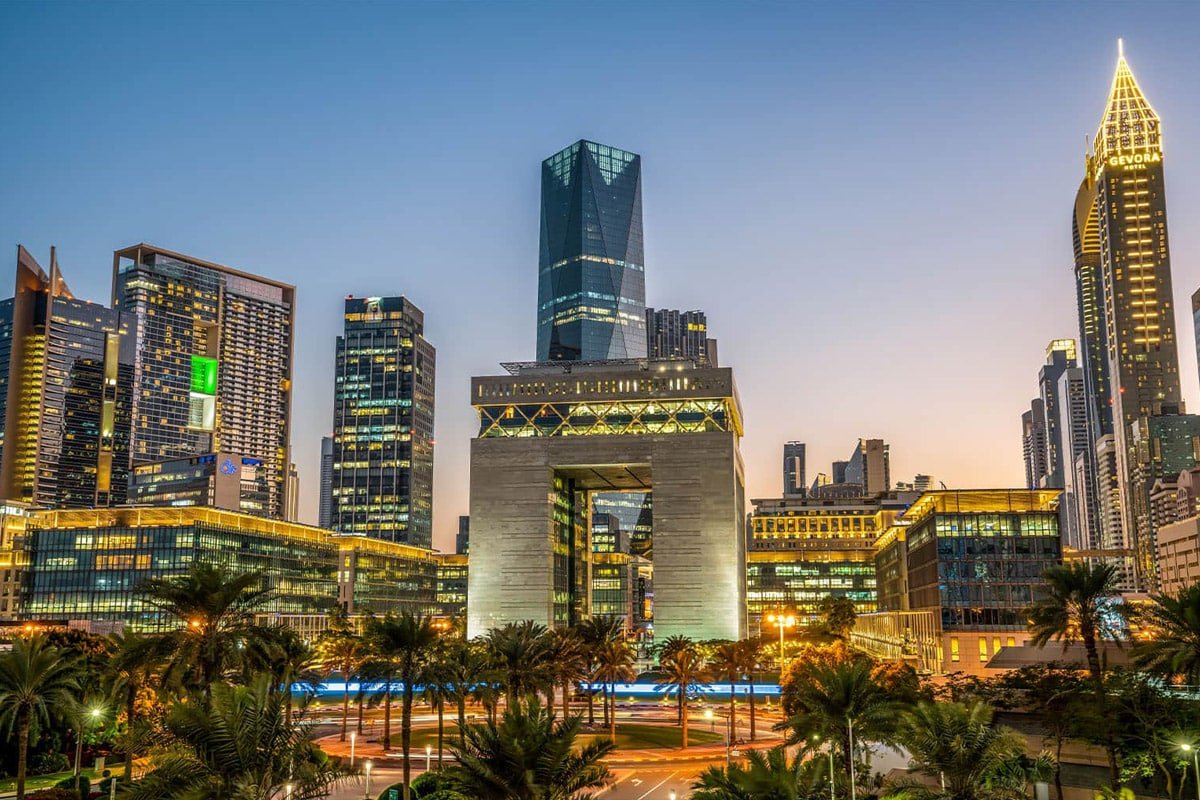
DIFC registered companies passed 10,000 for the first time in the first half of 2026, a milestone for Dubai’s financial district.
A milestone for Dubai’s financial district: active companies registered at the Dubai International Financial Centre (DIFC) passed 10,018 in the first half of 2026, up 30% year-on-year, with 2,318 new active firms added over the past twelve months alone.
Regulated financial services companies grew 16% to 1,134. Within that, the ecosystem now includes 327 banking and capital markets firms, 165 insurance and reinsurance companies, and 592 wealth and asset management businesses. AI, fintech and innovation companies grew fastest of all, up 39% year-on-year to 1,933.
Family business structures and foundations — increasingly popular vehicles for wealth planning among the UAE’s international resident base — also expanded sharply, with family business entities up 36% to 1,408 and foundations up 67% to 1,409.
DIFC’s own AI transformation initiative is projected to generate $3.5 billion in economic value and create 25,000 jobs, part of the reason DIFC now ranks seventh globally on the Global Financial Centres Index, and remains the top-ranked centre across the Middle East, Africa and South Asia.
The growth in family offices and foundations in particular is worth watching for anyone structuring property ownership through the UAE — it points to a maturing legal and advisory ecosystem around exactly that kind of long-term wealth planning.
DIFC’s insurance segment alone generated $4.2 billion in gross written premiums in 2025, underscoring how deep the ecosystem now runs beyond banking and asset management. Sheikh Maktoum bin Mohammed credited the milestone to “continued confidence in Dubai’s regulatory framework,” while DIFC Governor Arif Amiri pointed to “strong momentum across major financial services segments.”
The centre’s physical footprint is expanding to match: DIFC Square, a 600,000-square-foot development, is already fully pre-leased, and DIFC Academy has grown its programming 22% to 144 courses to keep pace with demand for talent. That combination — a fully absorbed commercial building well ahead of typical leasing timelines, plus record company registrations — is a strong indicator that occupier demand across DIFC’s wider portfolio, including its newly launched residential offering, is being driven by genuine business expansion rather than speculative interest.
DKey’s Dubai team continues to see steady demand from DIFC-based professionals seeking homes within a short commute of the district — exactly the kind of occupier-driven demand that tends to support price growth, rather than pure speculation. That kind of growth tends to reinforce itself over time as more firms follow their peers into an established hub.
The pace of that growth is worth isolating: 2,318 of DIFC’s 10,018 active companies — nearly a quarter of the entire registered base — were added in just the past twelve months, a pace of net new registration that stands out even for a centre already used to rapid growths. Regulated financial services firms make up roughly 11% of the total registered base, meaning the bulk of DIFC’s headline growth is coming from the wider ecosystem of professional services, holding structures, and technology firms that cluster around a regulated financial centre rather than from license applications within the regulated perimeter itself.
That distinction matters for how the growth should be read: a regulated-entity count growing steadily alongside a much faster-growing base of adjacent professional and family-office structures is generally a sign of an ecosystem maturing outward from its core, rather than one narrow segment driving all the headline numbers. DIFC’s own data bears this out — family business entities and foundations, both vehicles used almost exclusively for long-term wealth and succession planning rather than day-to-day trading, posted some of the fastest percentage growth of any category in the period.
Source of information: Khaleej Times