RAK Central: Ras Al Khaimah’s Sold-Out Mega Business District Takes Shape
September 18, 2025
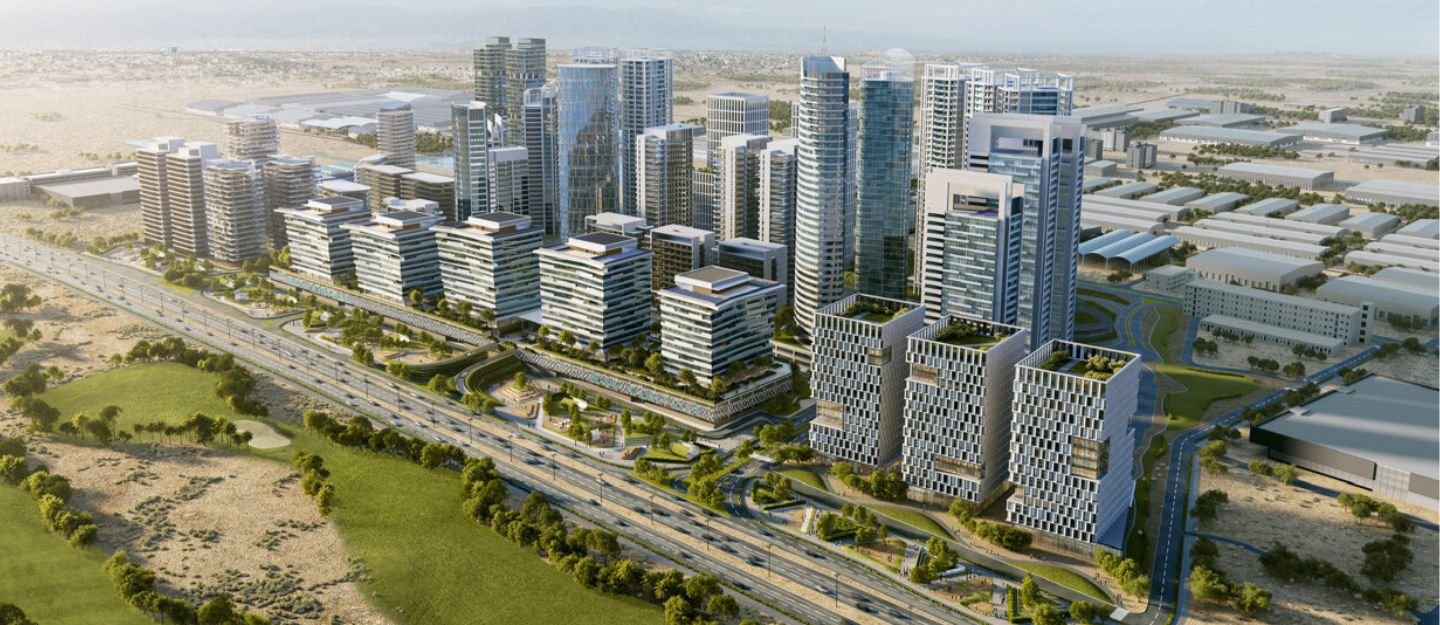
RAK Central, a mixed-use business and residential district developed by Marjan in Ras Al Khaimah, has sold out its plots just 15 months after launch — a sign of how quickly investor appetite for the emirate has grown.
Positioned near Sheikh Mohammed bin Salem Al Qasimi Street with direct access to the E11 highway, Al Marjan Island, RAKEZ Free Zone and Al Hamra Golf Club, the 3.1 million square metre district is designed to accommodate more than 6,000 professionals across five Grade A office buildings, over 4,000 residential units and more than 1,000 hotel keys.
Marjan CEO Abdulla Al Abdouli said early investors could see returns of 15–20% over the coming years as the district matures. The first phase — the RAK Central HQ office complex — is expected to open within 24 months, with the wider district growing alongside major nearby projects such as the $3.9 billion Wynn Al Marjan Island resort, targeted to open in 2027.
RAK Central is one of several signals that Ras Al Khaimah is maturing from a quieter neighbour of Dubai into an investment destination in its own right, with its own business infrastructure, hospitality supply and now, integrated residential communities.
Marjan’s masterplan splits the district roughly 15% office and 85% residential and hospitality, translating into a gross floor area of 8.3 million square feet. Infrastructure works were completed in September 2025, and delivery is phased from 2027, aligning RAK Central’s residential handover with a broader supply gap: Ras Al Khaimah is projected to need roughly 45,000 additional residential units over the next seven years, of which RAK Central’s 4,000-plus units represent a meaningful first tranche.
The district’s timing also lines up with the neighbouring $3.9 billion Wynn Al Marjan Island resort, expected to create around 7,500 jobs once operational in 2027 — a workforce that will need housing within commuting distance, reinforcing demand for exactly the kind of mixed residential and hospitality product RAK Central is delivering.
For investors watching Ras Al Khaimah’s trajectory, a sold-out land bank against a defined multi-year unit shortfall is a rare combination — it suggests the emirate’s residential pipeline still has real room to run even as commercial confidence has already been proven. DKey is already fielding enquiries from investors looking to secure units in RAK Central and neighbouring Al Marjan Island ahead of the anticipated price re-rating once Wynn Al Marjan Island opens.
Ras Al Khaimah’s broader appeal has been building for several years, driven by a lighter-touch freehold ownership regime for foreign buyers, lower entry prices than Dubai or Abu Dhabi, and a steadily expanding tourism base anchored by attractions like the Jebel Jais zipline and the emirate’s growing string of beach resorts. RAK Central is designed to capture the next stage of that growth story by giving the emirate its first true mixed-use business district, rather than relying solely on stand-alone hospitality and residential projects scattered across the coastline.
The five Grade A office buildings are aimed squarely at regional and international companies looking for lower-cost alternatives to Dubai’s established business districts without sacrificing infrastructure quality — RAK Central’s direct highway access and proximity to RAKEZ Free Zone are specifically designed to appeal to logistics, trading and light-manufacturing tenants who need efficient access to both Ras Al Khaimah’s port facilities and the wider UAE road network. Marjan’s decision to phase delivery from 2027 rather than launching all five towers simultaneously also reflects a measured approach to absorbing office demand gradually, avoiding the kind of oversupply that has periodically weighed on other Gulf commercial markets.
Ras Al Khaimah’s government has also been actively courting the kind of institutional capital that projects like RAK Central need to succeed at scale, streamlining approvals for master developers and expanding RAKEZ’s incentive packages for companies relocating regional headquarters functions to the emirate. That policy support, combined with land prices that remain meaningfully lower than comparable sites in Dubai, is why several regional developers have signalled interest in following Marjan’s lead with their own mixed-use announcements in Ras Al Khaimah over the coming years.
Source of information: Khaleej Times